- Home
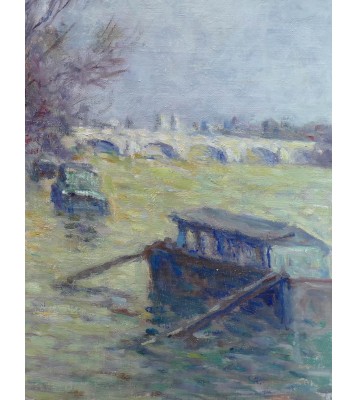
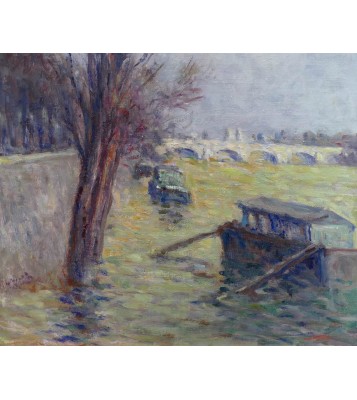
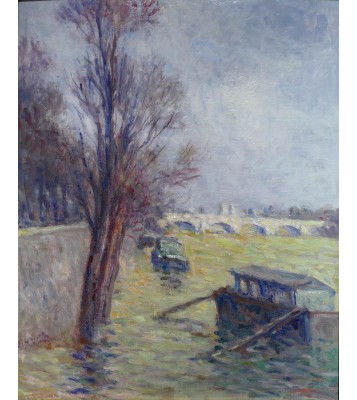
- Luce Maximilien Post-impressionist Painting 20th Century Paris, Floods Near Pont Neuf 1910 Oil Certificat
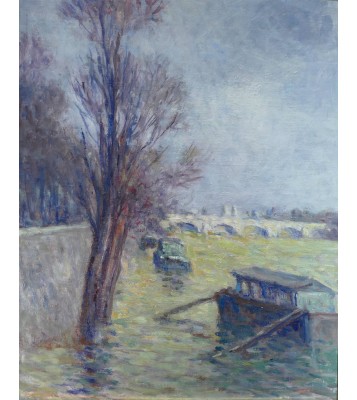
Luce Maximilien Post-impressionist Painting 20th Century Paris, Floods Near Pont Neuf 1910 Oil Certificat
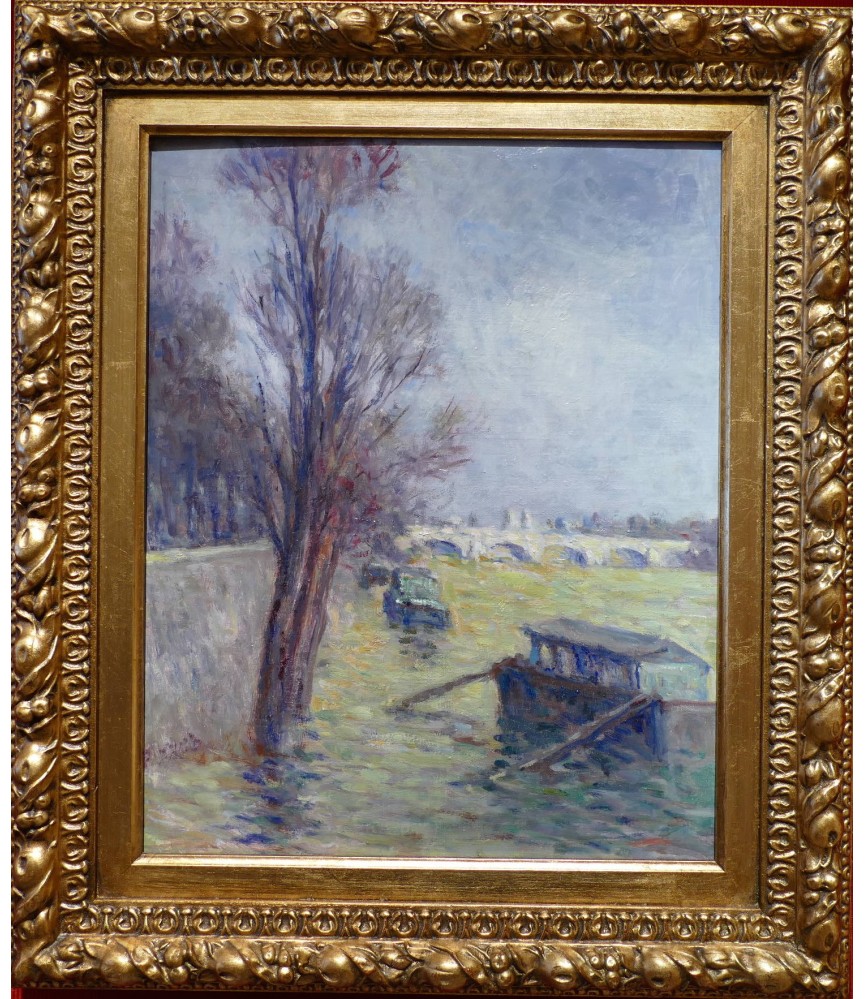
LUCE Maximilien ( 1858 / 1941 )
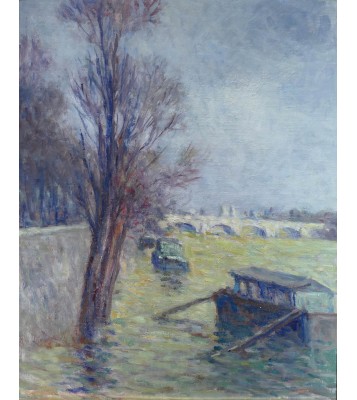
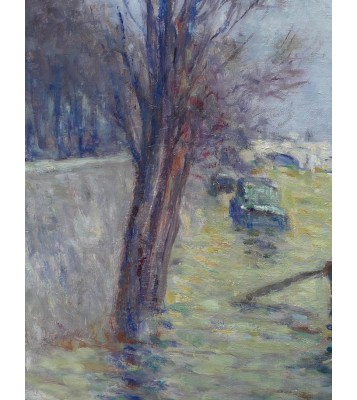
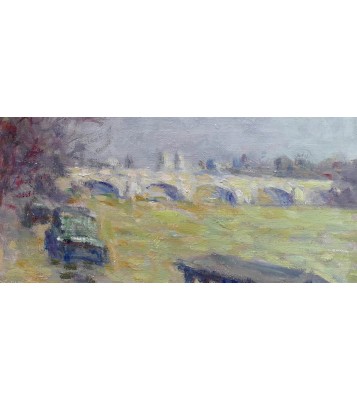
Paris, the floods near the Pont Neuf around 1910.
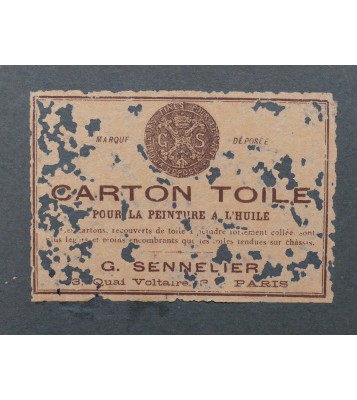
Oil on canvas mounted on cardboard.
17 x 12,6 in
Certificate of authenticity by Madame Bazetoux, and inclusion in the supplement of the catalog raisonné in preparation.
Maximilien Luce ( 1858 / 1941 ) A master of post-impressionismBorn in Paris on March 13, 1858, Maximilien Luce first worked as an apprentice. He is 13 when the Parisian people revolt during the days of the Commune of Paris. He will always keep the memory of this period, keeping a personal commitment to his friends old communards. The son of a workman, he always aspired to an egalitarian ideal, by staging in his work the most humble workers: those of the shipyards and the steelworks, but also the small trades, the knacker, the pile-drivers, Flooring.In 1872, he enrolled in evening classes to become an engraver and entered in 1876 as a skilled worker in an engraving workshop, at Froment, which produces for many illustrated journals.He left in 1877 with Froment for London and returned to France two years later to perform his military service, first in Brittany, then in Paris, where he studied under the direction of Carolus Duran. Wishing to work in the open air, like the Impressionists, he received the advice of Camille Pissarro, with whom he became friends, before meeting Paul Signac, Georges Seurat, Theo Van Rysselberghe and Louis Valtat, School of the Neo-Impressionists.Interested in research into the effects of light and the effects of prisms rendered by colors, he worked in a divisionist style, producing numerous pointillist paintings on the life and streets of Paris.In 1887, Maximilien Luce joined the Society of Independents with Paul Signac and took an active part in the exhibitions organized by the group.Wishing to be a witness of his time, Maximilian Luce had adopted this egalitarian ideal, which he staged in his work. This did not prevent him from composing otherwise beautiful landscapes by pushing the principles of Impressionism to its extreme consequence by practicing the technique of pointillism.At the same time, he also collaborated with anarchist newspapers such as "Le Père Peinard" or "La Révolte", and "L'Assiette au Beurre", which were very read at that time. He was implicated in the "Trial of the Thirty" in 1894 and was imprisoned for 40 days with 22 of his friends for "anarchists" before taking refuge in Charleroi, where he made known divisionism in Belgium. Pissarro, Signac, Cross and art critic Fénelon support Luce in his fight against inequalities.Always haunted by the memory of the Commune, he painted around 1910, "Long live the Commune", according to Honoré Daumier, and composed around 1917 the tragic "Execution of Varlin". Eugene Varlin was one of the highest figures of the March Revolution, arrested on May 28, 1871, mutilated, disfigured and dragged to the top of Montmartre where he was executed without trial.From the 1910s, Maximilien Luce, considering that he had exploited all the techniques of divisionism, turned to a less strict technique by painting urban scenes and multiplying the representations of men at work in a post-impressionist style.Installed in Rolleboise from 1920, he produced many paintings representing landscapes less appreciated than his previous works.In 1935 he succeeded Paul Signac as President of the Society of Independent Artists, post of which he resigned during the German occupation to mark his protest against the prohibition of Jewish artists to exhibit.During his career, Maximilien Luce produced a large number of oils, drawings and illustrations, especially at the beginning, as well as lithographs. He also maintained a constant correspondence with many painters, such as Seurat, Van Rysselberghe and Valtat, before dying in Paris on February 6, 1941.
LUCE Maximilien ( 1858 / 1941 )
Paris, the floods near the Pont Neuf around 1910.
Oil on canvas mounted on cardboard.
17 x 12,6 in
Certificate of authenticity by Madame Bazetoux, and inclusion in the supplement of the catalog raisonné in preparation.
Maximilien Luce ( 1858 / 1941 ) A master of post-impressionismBorn in Paris on March 13, 1858, Maximilien Luce first worked as an apprentice. He is 13 when the Parisian people revolt during the days of the Commune of Paris. He will always keep the memory of this period, keeping a personal commitment to his friends old communards. The son of a workman, he always aspired to an egalitarian ideal, by staging in his work the most humble workers: those of the shipyards and the steelworks, but also the small trades, the knacker, the pile-drivers, Flooring.In 1872, he enrolled in evening classes to become an engraver and entered in 1876 as a skilled worker in an engraving workshop, at Froment, which produces for many illustrated journals.He left in 1877 with Froment for London and returned to France two years later to perform his military service, first in Brittany, then in Paris, where he studied under the direction of Carolus Duran. Wishing to work in the open air, like the Impressionists, he received the advice of Camille Pissarro, with whom he became friends, before meeting Paul Signac, Georges Seurat, Theo Van Rysselberghe and Louis Valtat, School of the Neo-Impressionists.Interested in research into the effects of light and the effects of prisms rendered by colors, he worked in a divisionist style, producing numerous pointillist paintings on the life and streets of Paris.In 1887, Maximilien Luce joined the Society of Independents with Paul Signac and took an active part in the exhibitions organized by the group.Wishing to be a witness of his time, Maximilian Luce had adopted this egalitarian ideal, which he staged in his work. This did not prevent him from composing otherwise beautiful landscapes by pushing the principles of Impressionism to its extreme consequence by practicing the technique of pointillism.At the same time, he also collaborated with anarchist newspapers such as "Le Père Peinard" or "La Révolte", and "L'Assiette au Beurre", which were very read at that time. He was implicated in the "Trial of the Thirty" in 1894 and was imprisoned for 40 days with 22 of his friends for "anarchists" before taking refuge in Charleroi, where he made known divisionism in Belgium. Pissarro, Signac, Cross and art critic Fénelon support Luce in his fight against inequalities.Always haunted by the memory of the Commune, he painted around 1910, "Long live the Commune", according to Honoré Daumier, and composed around 1917 the tragic "Execution of Varlin". Eugene Varlin was one of the highest figures of the March Revolution, arrested on May 28, 1871, mutilated, disfigured and dragged to the top of Montmartre where he was executed without trial.From the 1910s, Maximilien Luce, considering that he had exploited all the techniques of divisionism, turned to a less strict technique by painting urban scenes and multiplying the representations of men at work in a post-impressionist style.Installed in Rolleboise from 1920, he produced many paintings representing landscapes less appreciated than his previous works.In 1935 he succeeded Paul Signac as President of the Society of Independent Artists, post of which he resigned during the German occupation to mark his protest against the prohibition of Jewish artists to exhibit.During his career, Maximilien Luce produced a large number of oils, drawings and illustrations, especially at the beginning, as well as lithographs. He also maintained a constant correspondence with many painters, such as Seurat, Van Rysselberghe and Valtat, before dying in Paris on February 6, 1941.
Specific References